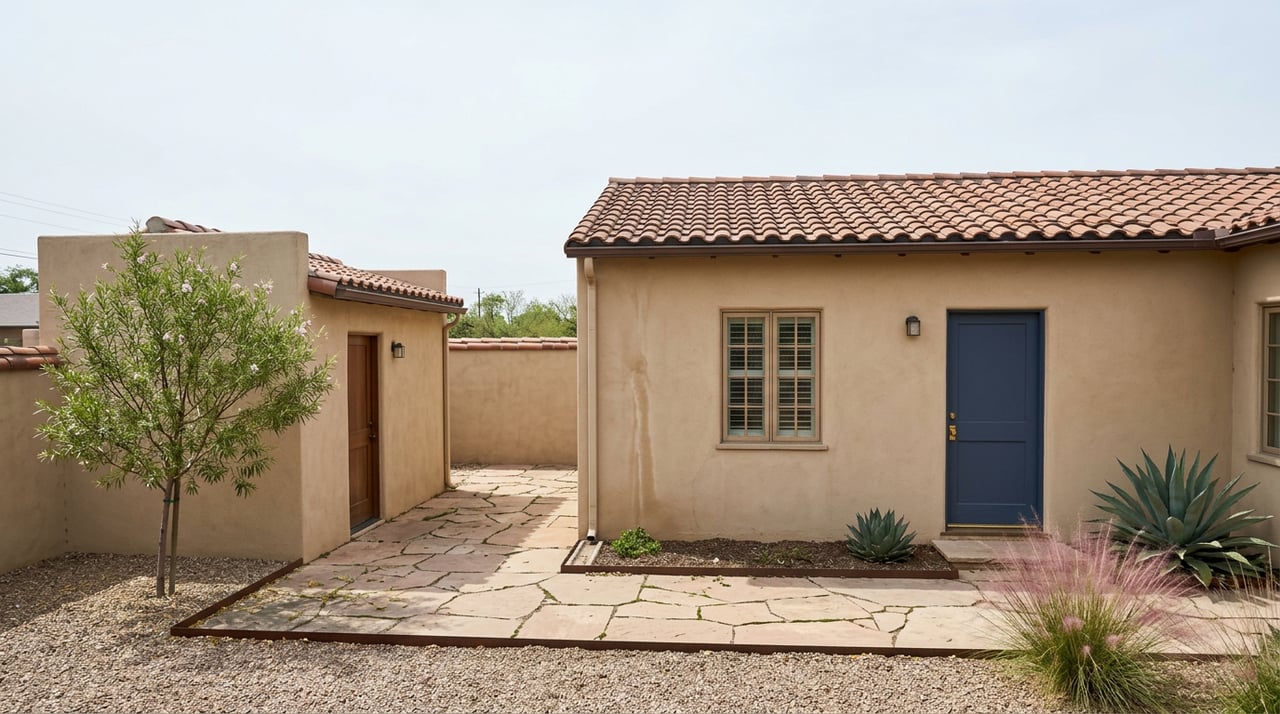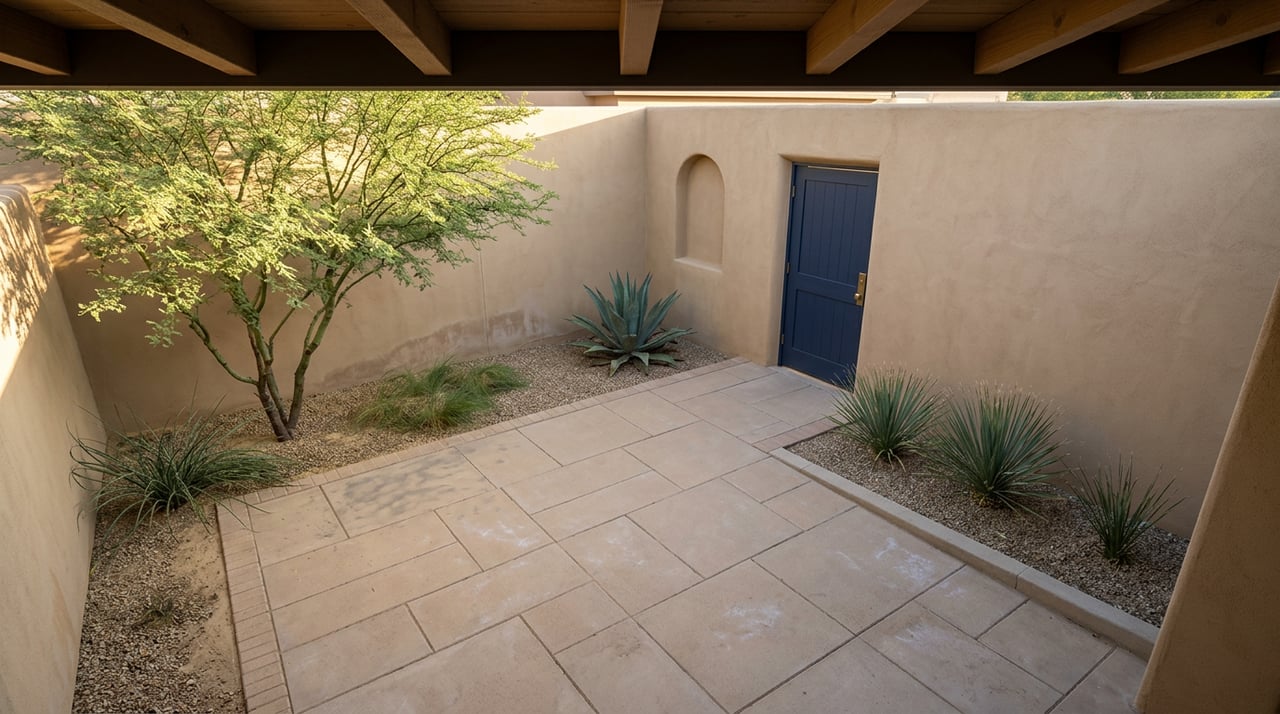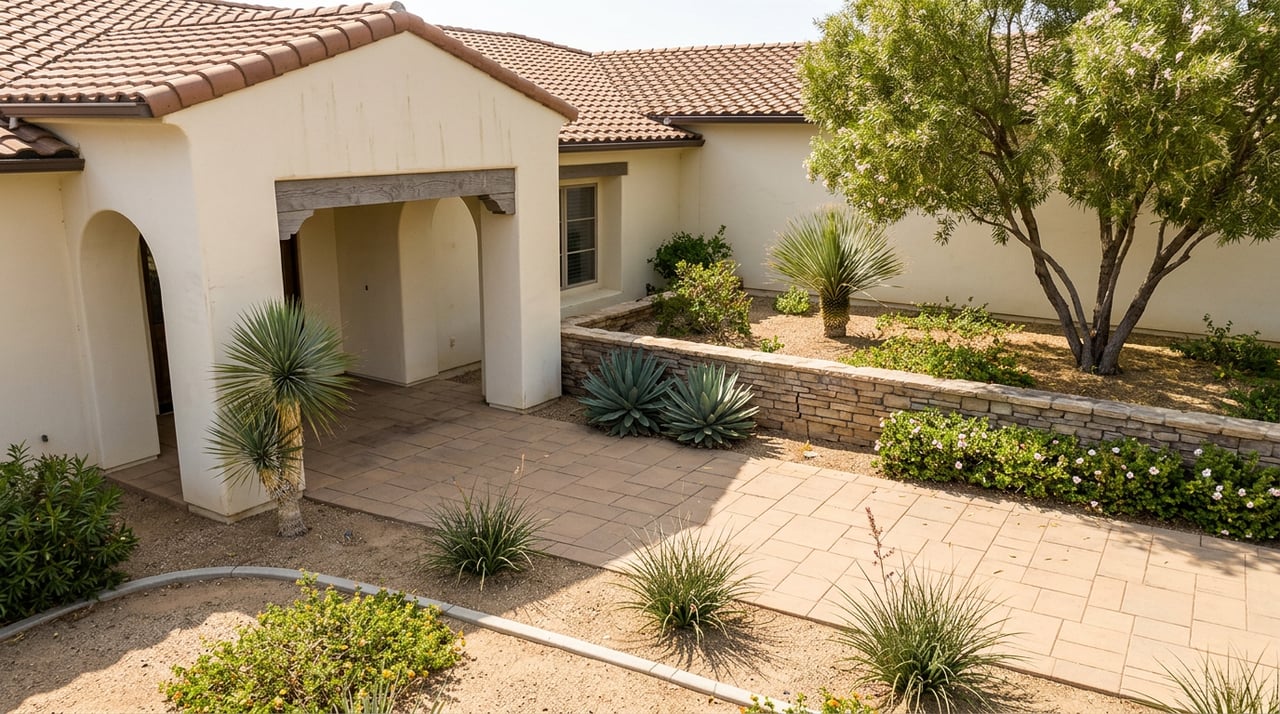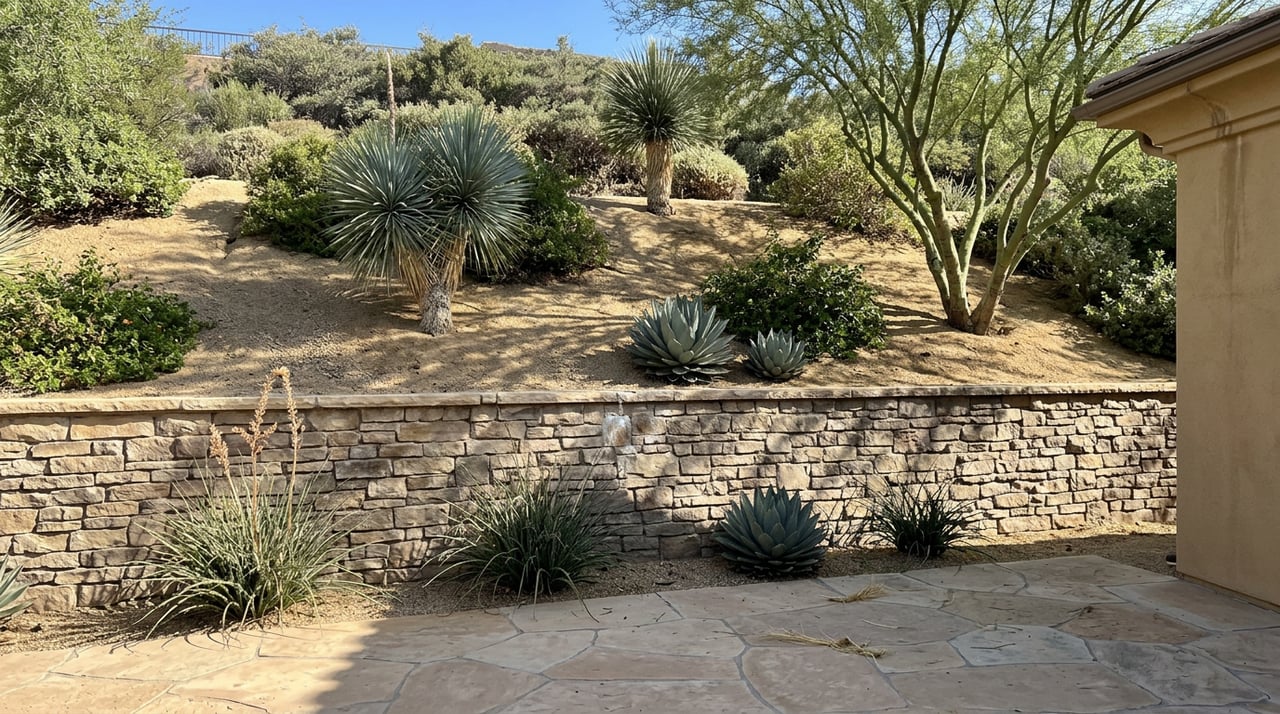
Tour enough hillside listings in Bear Ridge and you start to notice where buyers' eyes go first. They walk the kitchen, check the primary closet, step onto the back patio to take in the view of the valley falling away toward the Rio Grande. Almost nobody walks the property line and looks at the rock wall holding the yard in place. That's the item that ends up in the option period renegotiation.
Bear Ridge is built into the west side of the Franklin Mountains, not on top of flat ground like most of El Paso's residential stock. Every lot up here was graded, which means every lot has a retaining structure somewhere on it, whether that's a low decorative rock wall along the driveway or a taller engineered wall holding back the slope behind the house. That structure is doing real work. It just doesn't get treated like it, and that gap between what the wall does and how it's inspected, insured, and disclosed is where deals in this neighborhood run into trouble.
The Foundation Story You've Read Doesn't Apply Up Here
If you've searched anything about El Paso home inspections, you've probably already read about caliche and expansive clay. That coverage is accurate, just not for this address. The clay-driven cracking that inspectors flag in the Upper Valley and Lower Valley, and the caliche-related settlement common in Pebble Hills, Montwood, the Eastlake developments, and subdivisions along Joe Battle Boulevard, comes from soil chemistry specific to those areas. Reports on the topic describe stair-step cracking in CMU block foundations on the mesa as a sign of differential settlement over inconsistent caliche, and parallel cracking in clay-soil neighborhoods as a sign of perimeter shrinkage during dry months. Bear Ridge sits on rockier, graded foothill terrain. That's a different substrate with a different failure pattern, and a standard slab-focused inspection checklist built for the mesa or the valley won't catch what's actually happening on a slope lot.
What's actually happening is slower and less dramatic than a cracked slab, which is part of why it gets missed. Local contractors who work these lots regularly describe it in terms of what's happening behind the wall, not the wall's surface. Extreme UV exposure, shifting desert soil, flash flooding, thermal expansion, and hillside runoff all put load on stone and masonry retaining structures over time. When a wall starts leaning, separating at a joint, or shifting because water isn't draining the way it should, that's usually a structural warning rather than a cosmetic one.
What Actually Fails on a Hillside Lot
Not every mark on a rock wall means a five-figure repair. The distinction between a wall that needs repointing and a wall that needs to come down usually comes down to whether the movement is isolated or systemic.
| What you see | What it usually means | Who should look at it |
|---|---|---|
| Minor mortar deterioration, a few displaced stones | Cosmetic wear, often correctable without rebuilding | A mason or landscape contractor |
| Surface cracking without bulging | Age and sun exposure, generally stable | A mason or landscape contractor |
| Small washouts near the base | Drainage needs attention before it worsens | A drainage or landscape contractor |
| Leaning, bulging, or visible separation at a joint | Structural movement behind the wall | A structural engineer |
| Water pooling or erosion channels behind the wall | Drainage failure that will accelerate wall movement | A structural engineer or drainage specialist |
The first three rows describe walls that local contractors report can often be repaired without full replacement, since a rock wall in El Paso is frequently still a strong repair candidate when the issue is isolated and the wall's structural alignment is intact. The last two rows describe the kind of movement that should stop a transaction until someone with an engineering license has looked at it, because retaining walls are especially vulnerable to soil pressure and drainage problems and a failure isn't something a homeowner discovers gradually.
The Premium You're Paying Isn't Just Square Footage
Bear Ridge prices don't move in a straight line with square footage the way they do in a flatter subdivision. They move with elevation. The higher a lot sits on the mountain, the more the view is worth, and the more grading and retaining structure it took to build a flat pad up there in the first place. Across the neighborhood, resale price per square foot runs from around $190 on the lower blocks to well over $300 near the top, and the gated Tuscany Ridge pocket prices five and six thousand square foot homes at $1.4 million to $2 million, which works out to roughly $280 to $330 a square foot. That's not a size premium. It's a slope premium.
Context helps here. Citywide, the median sale price over the three months ending May 2026 was around $254,000, up less than one percent year over year. In Bear Ridge, the median sold price in May 2026 was closer to $570,000, at roughly $198 a square foot on average across the neighborhood as a whole. That's a meaningfully different market inside the same city, and the gap isn't explained by finish level or lot size alone. It's explained by terrain, which means the retaining structure that makes the terrain buildable is part of what you're paying for, even though it rarely shows up as its own line item in a listing description.
Most Bear Ridge homes were built between 1992 and 2025, with a heavy concentration around 2010, so a lot of these retaining walls are now old enough that UV exposure, thermal cycling, and monsoon runoff have had a decade or more to do their work. A buyer paying a premium for elevation should expect to budget for wall maintenance the way they'd budget for a roof, and a seller listing a hillside property should know that a wall issue found during option period is going to cost credibility as well as money if it surfaces as a surprise.
HOA Covenants Weren't Written for the Slab Either
If your Bear Ridge property sits inside a gated section like Tuscany Ridge, the retaining wall isn't just a structural question, it's a covenant question. Gated communities in this corridor typically require architectural committee approval before any exterior change, and a wall rebuild or a regrading project generally counts. That review process exists to protect the sightlines and consistency that buyers are paying the elevation premium for in the first place, but it also means a repair that would take a weekend in a flatter neighborhood can take longer here once you factor in submittal and approval.
This isn't unique to resale. New construction in the same stretch of the west side, like Padilla Homes' Tuscany at Ridgeview near Franklin High School, is built and sold under the same kind of covenant framework, with the community's upscale environment maintained by design guidelines from day one. If you're buying into a gated hillside pocket, ask for the architectural guidelines before you assume you can fix a wall issue on your own timeline.
What to Do Before You Sign Anything
Whether you're on the buying or selling side of a Bear Ridge contract, a few steps head off the wall problem before it becomes a renegotiation:
- Walk the perimeter, not just the interior. Look at every retaining structure on the lot, not just the one visible from the patio.
- Ask specifically about drainage history. A wall that's been wet behind it for years fails differently than one that's stayed dry.
- Get a structural opinion on anything that leans, bulges, or separates. A general home inspector can flag it, but a licensed structural engineer should be the one who signs off.
- Check whether the wall or the lot sits inside a gated section with architectural review. That changes your repair timeline.
- Confirm permit requirements before any repair or rebuild. The City of El Paso requires a permit to construct, enlarge, alter, repair, move, demolish, or change the occupancy of a building or structure within city jurisdiction, and a significant retaining wall repair can fall under that rule. The city's Planning & Inspections department is the place to confirm before work starts, not after.
A Few Questions We Hear Often
Does homeowners insurance cover a failing retaining wall? Coverage varies by policy and by cause of failure, so this isn't something to assume either way. Retaining walls are often treated as a separate structure with its own coverage limit, and damage from gradual causes like ongoing drainage failure is typically treated differently than sudden damage. Confirm the specifics with your insurance provider before you waive a wall-related repair request in a contract.
Is a wall issue a dealbreaker, or just a negotiation point? Usually a negotiation point, not a dealbreaker. Most of what shows up during a Bear Ridge inspection falls into the repairable category rather than the replace-the-whole-wall category. The mistake isn't finding an issue, it's not budgeting time for an engineer to weigh in before closing.
If you're buying or selling on this side of El Paso, the terrain is part of the deal, not a footnote to it. Longenbaugh Group works this stretch of the west side regularly, from the lower Bear Ridge blocks to the gated pockets higher up the mountain, and we build our listing marketing and buyer walkthroughs around what actually shows up in these homes, not a generic checklist. If you're weighing a move here, start with a clear read on what your home is worth in today's market. Get Your Instant Home Valuation, or browse current Bear Ridge listings to see what's active right now.